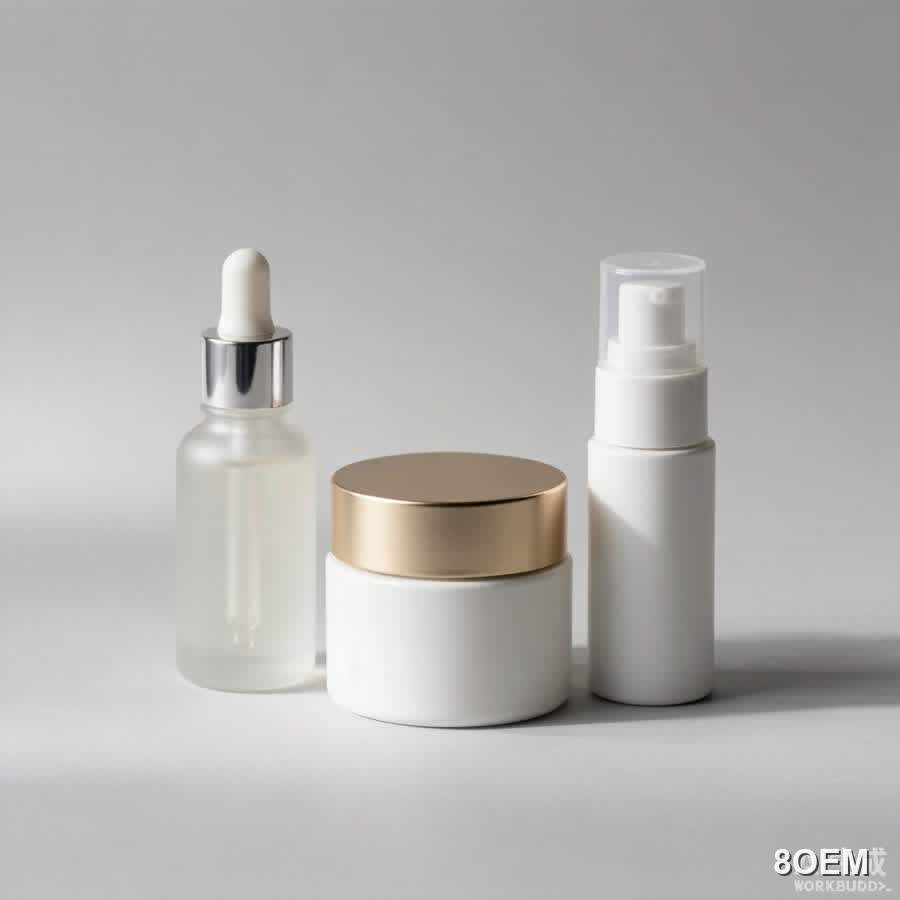
Cosmetic OEM Cost Breakdown 2026: Budgeting Skincare Production
Planning a private label skincare line in 2026? One of the first questions we hear from founders and procurement buyers is: “How much will it cost per unit?” The honest answer is: it depends on a handful of variables that you can control. This guide breaks down the main cost drivers in cosmetic OEM — ingredient grade, packaging, filling method, and minimum order quantity (MOQ) — so you can build a realistic budget and avoid surprises when comparing quotes from a cosmetic OEM manufacturer.
1. Ingredient Grade: The Foundation of Your Formula Cost
Your formula is the heart of your product, and its cost is largely driven by the quality and sourcing of ingredients. In 2026, we see three broad tiers:
- Standard actives and emollients — widely available, cost-effective, and suitable for basic moisturizers or cleansers.
- Premium actives (e.g., peptides, ceramides, bakuchiol) — higher price per kilogram, but they justify a higher retail price.
- Specialty ingredients (e.g., organic extracts, biotech-derived actives, sustainably sourced oils) — these can be 2–5 times more expensive than standard alternatives.
When you request a quote, ask your OEM partner for a detailed ingredient breakdown. A transparent manufacturer will show you the cost impact of each active. Remember: a small amount of a high-performance active can make a big difference in both efficacy and cost.
2. Packaging: More Than Just the Bottle
Packaging typically accounts for 20–40% of your total unit cost, depending on the complexity. Here’s what to consider:
- Primary packaging — the bottle, jar, tube, or airless pump. Airless pumps are more expensive but protect sensitive formulas.
- Secondary packaging — cartons, labels, and inserts. Custom printing and finishes (foil stamping, soft-touch lamination) add cost.
- Material choice — glass vs. PET, aluminum vs. plastic. Glass feels premium but is heavier and more expensive to ship.
To manage costs, start with a standard packaging option that fits your brand aesthetic, then upgrade as your volume grows. Many OEMs, including 8OEM, offer a catalog of stock molds that you can customize with your own label, drastically reducing tooling costs.
3. Filling and Assembly: Labor and Machine Time
Filling is the process of putting your product into its container. Costs vary by:
- Filling method — manual, semi-automatic, or fully automatic. High volumes justify automation, but for small batches, manual filling may be more cost-effective.
- Product texture — liquids, lotions, creams, and powders each require different equipment and handling.
- Assembly steps — adding pumps, caps, labels, and shrink bands adds labor time.
Ask your manufacturer for a per-unit filling cost based on your batch size. This is often quoted as a line item, so you can see exactly what you’re paying for.
4. MOQ: How Order Size Affects Unit Price
Minimum order quantity (MOQ) is one of the most significant levers on unit price. Here’s the general rule: the higher your MOQ, the lower your per-unit cost, because fixed costs (formulation, tooling, setup) are spread over more units.
For example, a custom formula with a 1,000-unit MOQ might cost $8.00 per unit, while the same formula at 5,000 units might drop to $5.50. However, you shouldn’t over-order just to reduce unit cost — you’ll tie up cash in inventory. Work with your OEM to find the sweet spot between MOQ and your budget.
If you’re just starting out, look for a manufacturer that offers low MOQs (e.g., 1,000–3,000 units) for custom formulas, or even lower for private label products. 8OEM, for instance, offers flexible MOQs depending on the product type and packaging.
5. Hidden Costs: Testing, Registration, and Logistics
Beyond the obvious costs, there are several that often catch new founders off guard:
- Stability testing and preservative efficacy testing — required for most markets to ensure product safety and shelf life.
- Regulatory compliance — depending on your target market (EU, US, China), you may need product notifications, safety assessments, or a Responsible Person.
- Shipping and customs — especially if you’re importing from China. Factor in freight, duties, and potential warehousing.
Always ask your OEM for a comprehensive quote that includes these items, or at least a clear list of what’s not included.
6. A Practical Framework for Budgeting
To build your budget, follow these steps:
- Define your target retail price — your unit cost should be no more than 20–30% of retail for a healthy margin.
- List your must-have ingredients — and ask for the cost impact of each.
- Select packaging — start with stock options if possible.
- Estimate your initial order size — based on sales forecasts and cash flow.
- Request a detailed quote — break down formula, packaging, filling, and any extra fees.
- Compare apples to apples — make sure each quote includes the same components.
For a deeper dive into cost factors, read our cost and pricing guide.
7. How 8OEM Helps You Manage Costs
At 8OEM, we specialize in helping brands of all sizes create high-quality skincare without overpaying. Our team offers:
- Custom formula development with transparent pricing on ingredients.
- Flexible MOQs to match your stage of growth.
- Stock packaging options to reduce upfront tooling costs.
- Halal, vegan, and clean formulations that meet international standards.
We serve clients exporting to the EU, US, China, and the Middle East, and we’re happy to walk you through the cost breakdown for your specific project. Contact us for a free consultation.
Ready to get a clear, itemized quote for your private label skincare line? Explore our OEM services or reach out to our team today — we’ll help you understand every cost so you can budget with confidence.
Frequently Asked Questions
What is the typical MOQ for custom cosmetic formulations in 2026?
MOQs vary widely by manufacturer and product type. Many Chinese OEMs offer MOQs between 1,000 and 3,000 units for custom formulas, while private label stock products may have lower MOQs. Always ask your manufacturer for their specific MOQ policy.
How can I reduce the unit cost of my skincare product?
You can reduce unit cost by increasing your order quantity, choosing stock packaging, simplifying your formula (using fewer premium actives), and negotiating with your manufacturer. Also, consider a 'clean' formula that avoids expensive preservatives or specialty ingredients.
What are the hidden costs in cosmetic OEM?
Hidden costs often include stability testing, preservative challenge tests, regulatory filings (e.g., CPNP in Europe, MoCRA in the US), and international shipping. Always request a full breakdown of all fees before signing a contract.
Does ingredient grade really affect the final price?
Yes, ingredient grade can significantly impact cost. Premium actives like peptides or organic extracts are more expensive than standard alternatives. However, using a small percentage of a high-quality active can still keep costs reasonable while delivering efficacy.